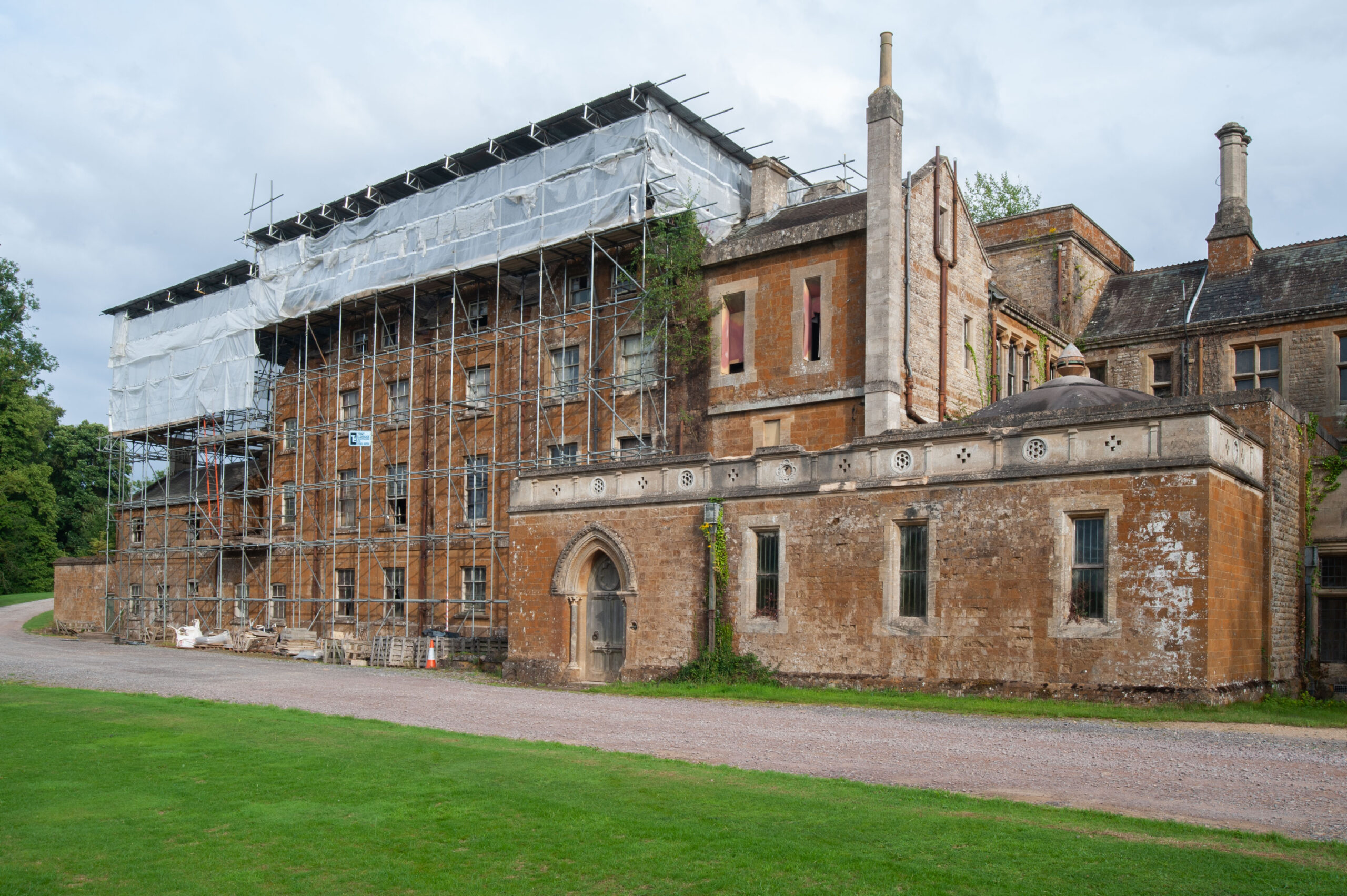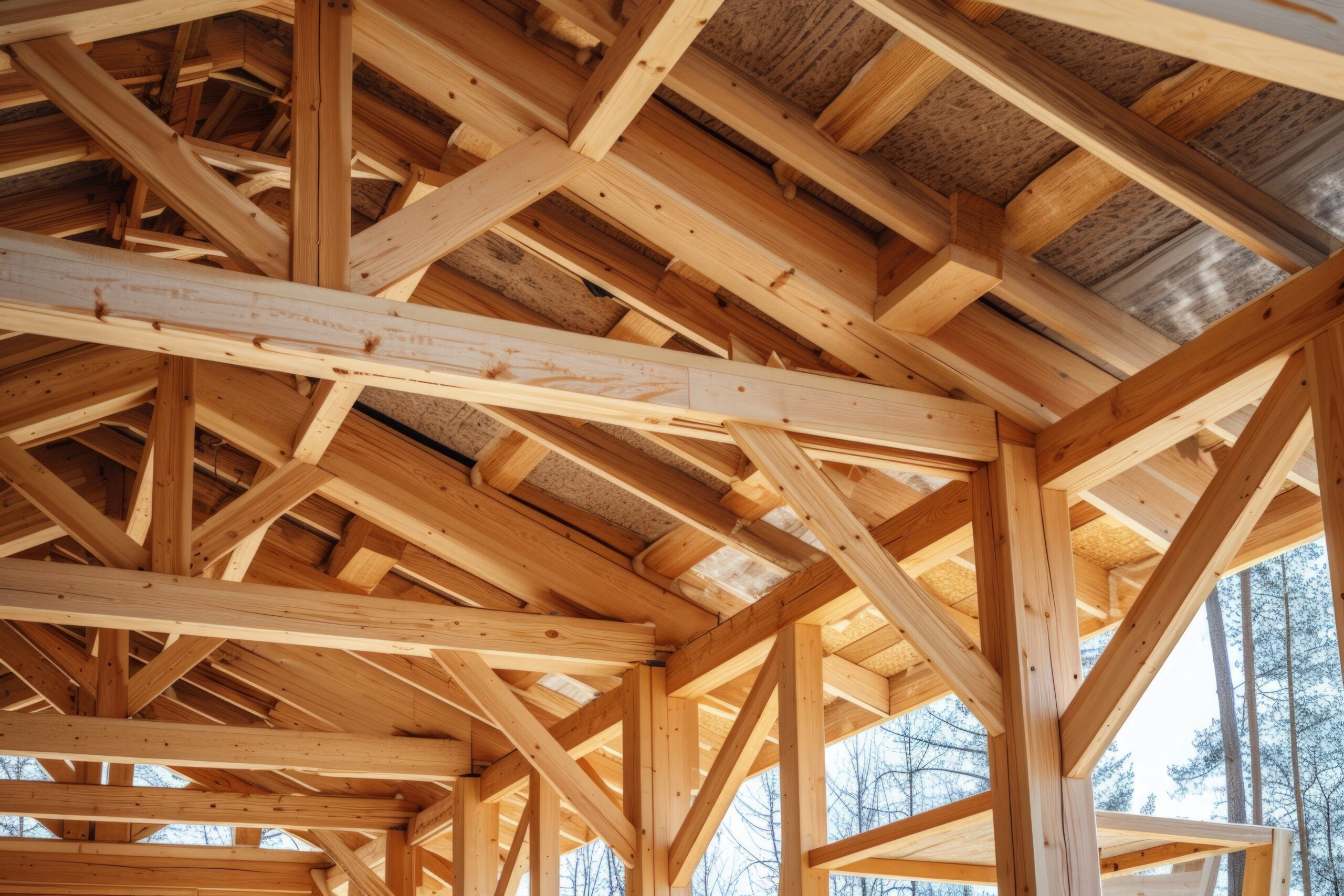



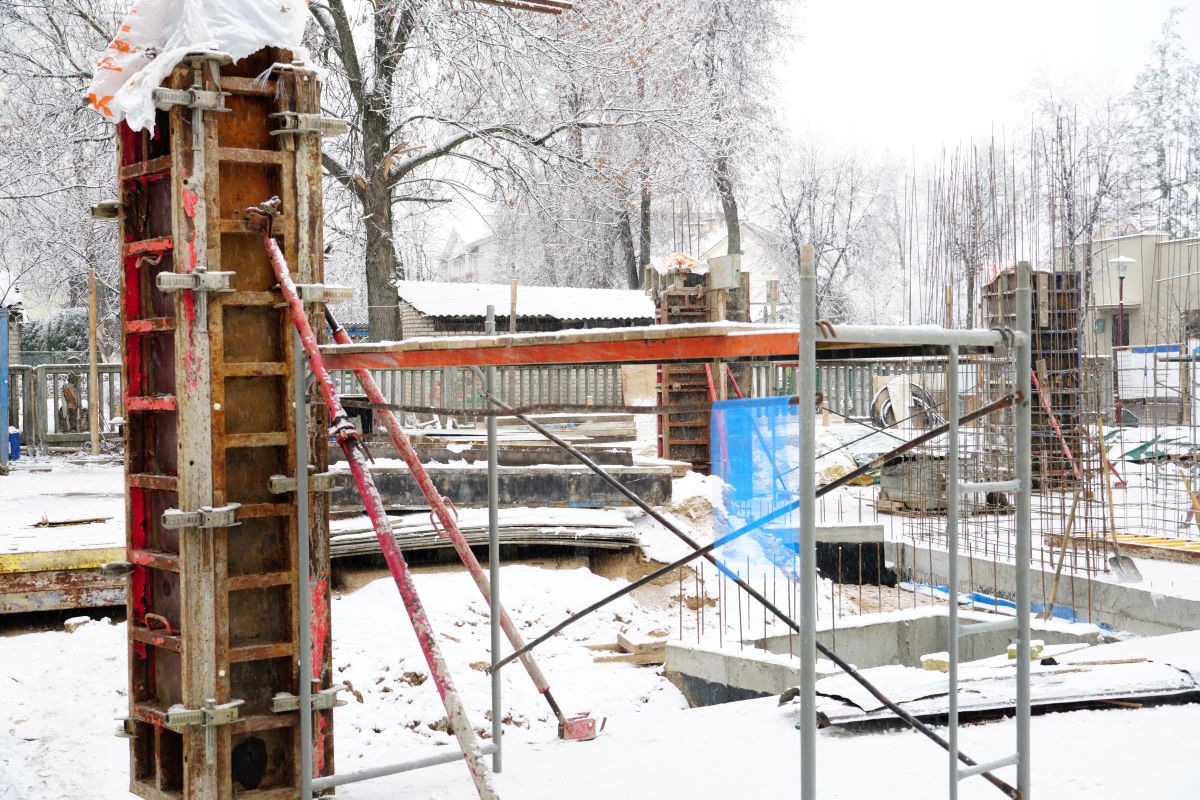
Construction or renovation projects don’t stop just because the temperature drops, but with shorter daylight hours, freezing conditions and unpredictable weather, winter work is often challenging for builders and contractors. The combination of cold, wet and dark changes the building risk profile and creates some very specific problems.
This blog looks at five key winter risks we see on project sites, and the actions that can be put in place to manage them.
Preventing minor leaks becoming major losses
Escape of water is one of the most frequent and expensive causes of loss on construction and renovation projects. Insurers and risk engineers consistently flag it as the number one cause of insurable loss on construction sites and in winter, that risk is increased.
Freezing temperatures can cause pipes to burst and can result in major leaks causing significant and long-lasting damage. Storm Arwen in 2021 showed how heavy snow and sub-zero conditions can expose vulnerable pipework and cause delays through power disruption.
For contractors, the key controls are:
• Insulate exposed pipework and vulnerable water services from frost and maintain a sensible minimum temperature to reduce risk of freezing.
• Drain down systems if the building will be unoccupied or unattended for long periods.
• Use leak detection and automatic shut-off where possible.
On larger schemes, we will usually expect to see a formal Water Management Plan or Water Systems Management Plan as part of the contractor’s overall risk management. The new Joint Code of Practice on the Prevention and Management of Escape of Water on Construction Sites and Buildings Undergoing Renovation sets out good practice in detail and is free to download from the Fire Protection Association. Even on smaller projects, using its principles to think through where water could escape and how it would be controlled is time well spent.
Staying warm without increasing fire risk
Temporary heaters are a fact of life on winter jobs. They keep finishes drying, help protect pipework from frost and make life on site that bit more comfortable. The drawback is that they introduce an additional ignition source and, therefore, a further fire risk.
Common issues we see include heaters placed too close to combustible materials, trailing cables to fan heaters, or equipment left running overnight. In partially completed buildings, where all fire safety elements may not yet be in place, a relatively small heater fire can spread very quickly, putting your project and the safety of you and others at risk.
Simple controls make a big difference:
• Position heaters well away from combustible materials and temporary storage, and ensure adequate ventilation for fuel fired heaters – following manufacturers’ instructions.
• Use thermostat-controlled heaters to prevent overheating.
• Implement a clear end of day shutdown procedure so heaters are isolated and switched off before the site is left unattended.
• Make sure the site Fire Risk Management Plan specifically addresses temporary heating.
Accidents in cold weather and poor light
Untreated surfaces in wintry conditions are rarely forgiving, and ice, frost, compacted snow and standing water all increase the likelihood of slips, trips and falls. Across the UK, slips, trips and falls consistently account for around 30 per cent of all non-fatal reported workplace injuries.
The same goes for the shorter daylight hours and working in poorer light. Insufficient visibility on building and renovation sites can mask changes in level, hide incomplete edges, and make it harder to spot hazards such as protruding fixings or wet surfaces that can increase slips and trips.
On renovation projects where access routes might be shared or pass close to the works, the potential for third party injury also rises.
Practical measures include:
• Regularly gritting and inspecting access routes, scaffolding run ups and site entrances, and providing temporary lighting.
• Providing suitable non-slip footwear for workers and ensuring it is worn.
• Allowing regular breaks in warm spaces so cold related fatigue does not creep in
• Training supervisors and workers to recognise the signs of cold stress – such as frostbite and hypothermia – and to stop work if conditions become unsafe.
• Positioning lighting to minimise glare and shadows that can obscure hazards.
• Checking and testing lighting regularly, and reporting it if it isn’t working.
• Appropriate of security lighting to deter trespass and support out of hours inspections.
• Keeping working conditions suitable so ice and poor light are not combined with trailing leads, offcuts and loose materials.
In the winter months, good slip and trip management is often what separates a clean claims record from a cluster of avoidable incidents, and good lighting is a relatively low-cost control that supports almost every other safety measure on site.
Securing unattended sites
The poorer daylight hours and winter weather, including decreasing temperatures can often bring sites to a standstill. Unattended renovation sites are attractive targets for thieves and vandals, particularly where high value tools and materials such as copper remain.
Insurers regularly see a spike in theft and malicious damage during holiday periods and extended periods when sites are unoccupied – our policy allows for cessations of up to 60 consecutive days.
Good winter security management should include:
• Clear records of site inspections carried out at regular intervals, typically at least once every seven days (as required by most UK policies).
• All security measures, such as locks, fencing, alarms and CCTV, properly in use when the site is unattended, and non-essential services turned off. Anything left on for frost or fire protection must be risk assessed.
• Tools and materials stored securely and out of sight where possible.
If the property is going to be unattended for a long period of time, your broker should be alerted at the earliest available opportunity.
If you are required to make a theft or malicious damage claim, being able to show that inspections were carried out and security was maintained will be important when the loss is adjusted.
Storms, flooding and water management
Last winter was the wettest winter on record, with nine named storms in 2024 alone and with climate change a real factor, the amount of rainfall is only likely to increase.
The additional water has to go somewhere, and renovation sites are often likely to be at risk. This is due to incomplete roofs or temporary coverings that are not fully watertight, blocked gutters and downpipes that lead to water backing up into the building, excavations and low-lying areas filling with water, and materials at ground level being damaged by surface water.
Practical controls for storms and water ingress include:
• Checking weather warnings and adjusting site activities accordingly.
• Making sure temporary roofs, tarpaulins and sheeting are properly fixed and checked after high winds.
• Keeping gutters, drains and temporary gullies clear of debris.
• Storing vulnerable materials off the ground and away from obvious flood paths.
• Using temporary flood barriers or sandbags where there is a known flood risk.
• Building water ingress and surface water flooding into the Water Management Plan, so it is treated as a managed risk rather than an afterthought.
From an underwriting perspective, good storm preparation shows that the contractor understands that climate volatility is part of the new normal, not a one-off inconvenience.
Planning matters
Winter does not have to mean a spike in claims or disruption. With a bit of planning in the above areas, building contractors can significantly reduce the risk profile of renovation and building sites.
For brokers, these conversations are a good opportunity to demonstrate value, helping clients understand where their responsibilities sit and how better risk management can support insurability.
If you would like to discuss how the risks in winter are treated under our renovation products, we are always happy to help.