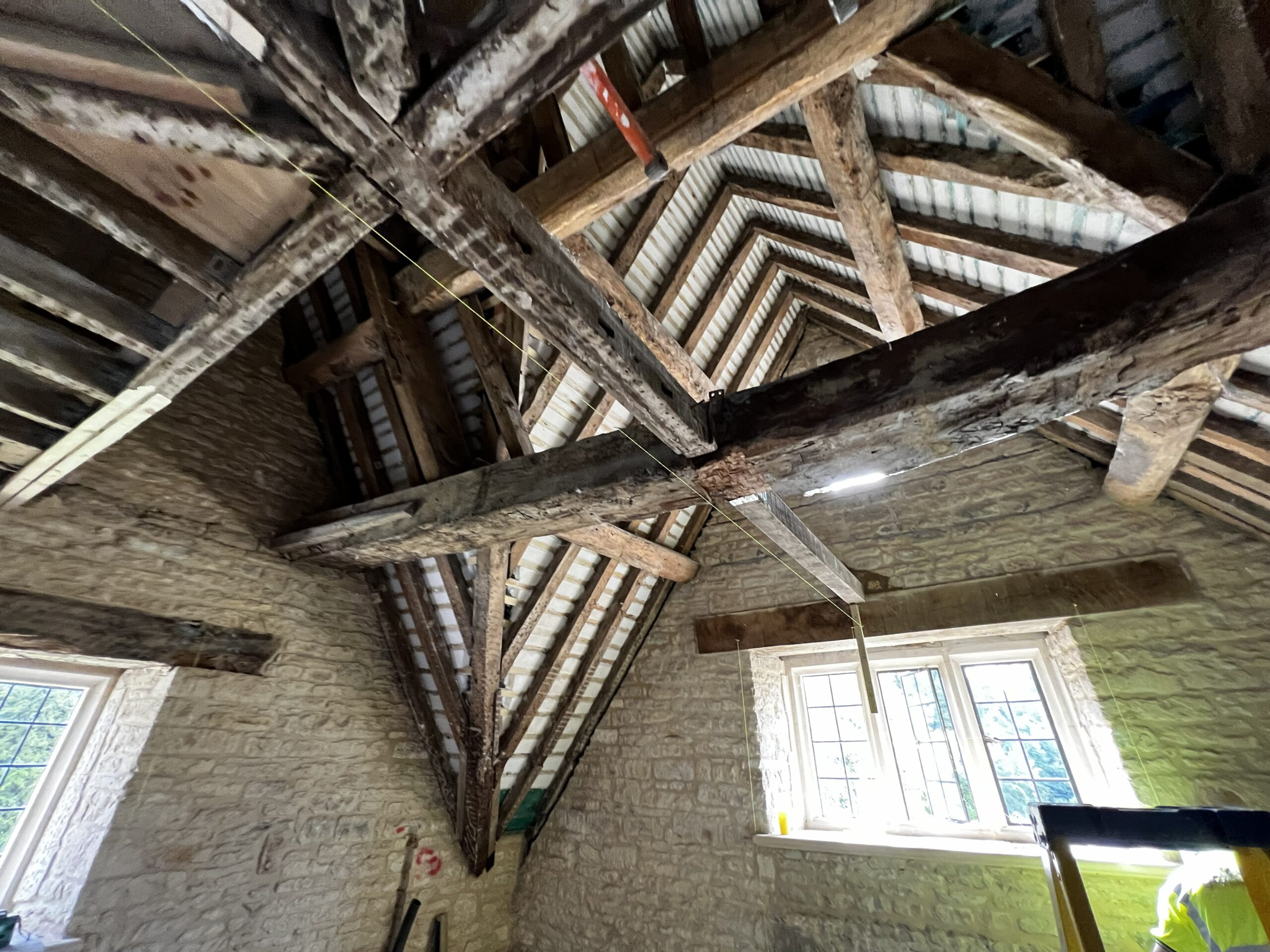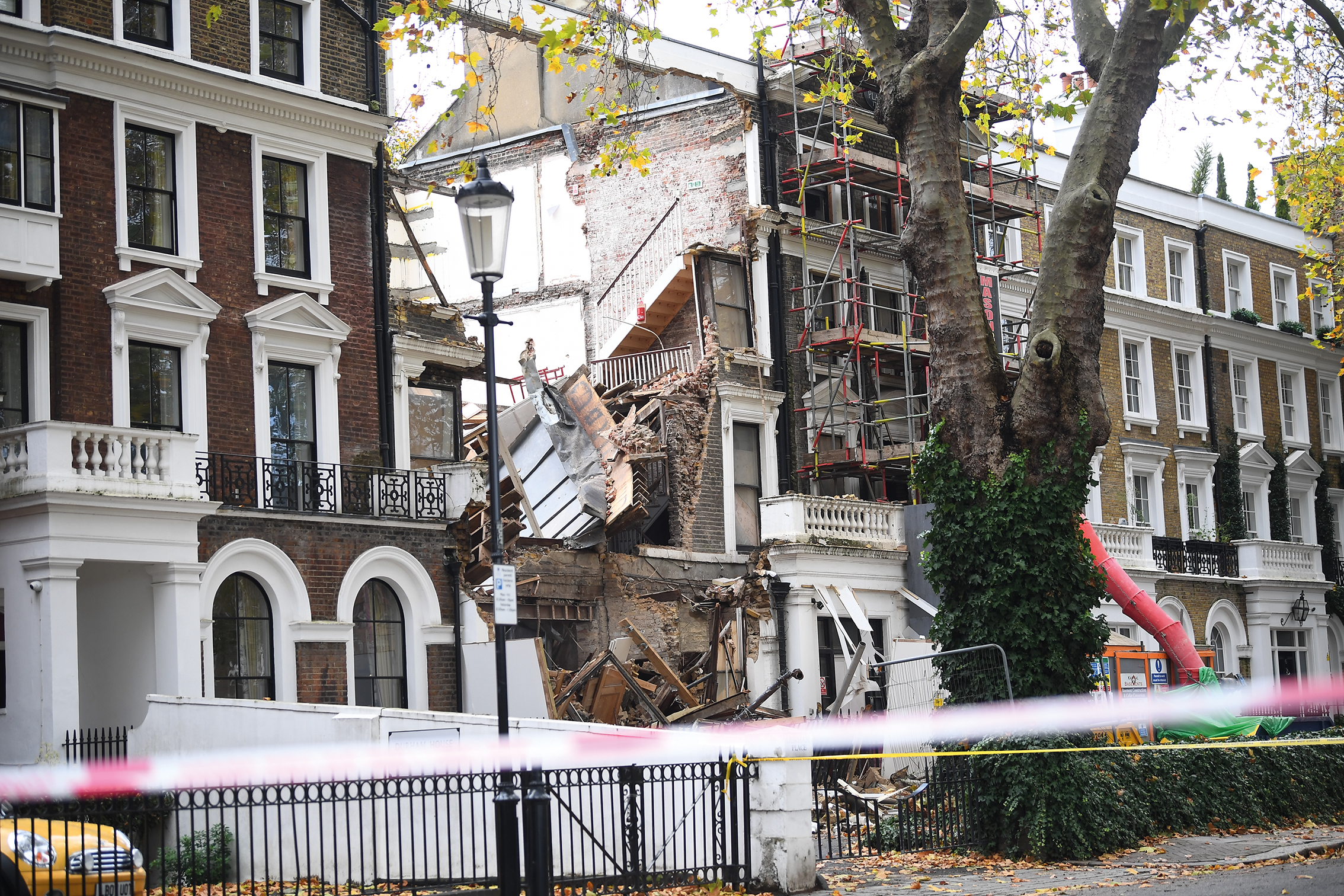



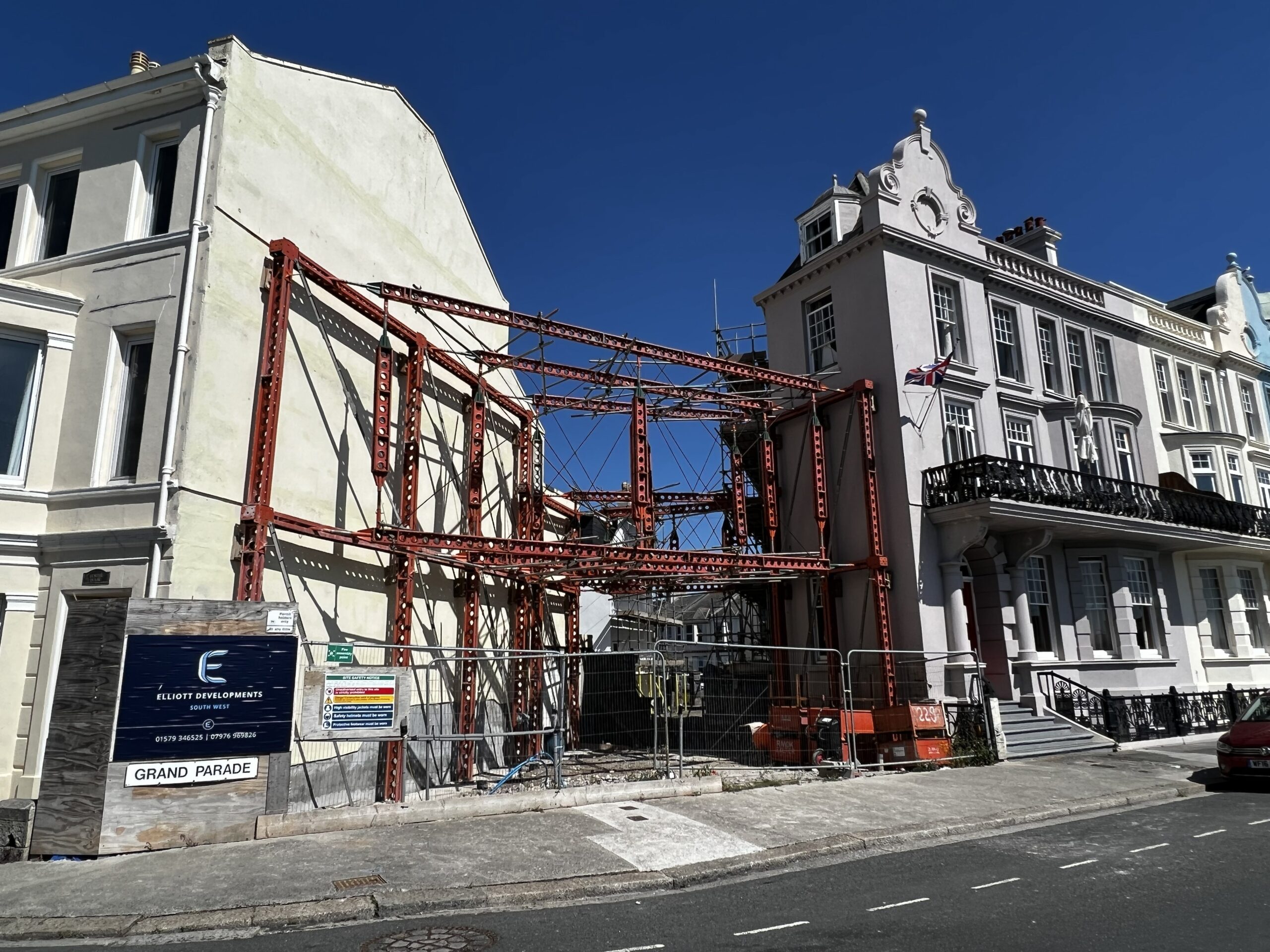
In the first article in this two-part series, we looked at why we have structural expertise in-house, how our Structural Risk Reviews work and why the information we ask brokers and clients to provide can add value rather than simply create another underwriting hurdle.
But identifying, understanding and managing structural risk does not mean every possibility can be removed.
A structural engineer can exercise the appropriate skill, care and diligence. A contractor can carry out the work properly. And damage can still happen.
That distinction matters on renovation projects because working with existing buildings brings uncertainty. An excavation may cause settlement to a neighbouring property despite being properly designed and executed. Vibration from construction work can lead to cracking in a sensitive adjoining building. Ground movement may occur because of unforeseen ground conditions.
In each case there may be damage, even though no engineer, contractor or designer has acted negligently.
That brings us to the second part of the story: the relationship between structural risk, Non-Negligent Liability insurance and our specialist Renovation Non-Neg Pro.
Duty of care does not mean guaranteeing the outcome
A structural engineer has a duty to perform their services to the standard expected of a reasonably competent structural engineer with similar experience working in similar circumstances.
On a renovation project, that extends beyond design calculations.
It includes understanding the existing structure, identifying foreseeable risks, advising clients about structural constraints, communicating the limitations of inspections, recommending further investigations where necessary, monitoring risks associated with temporary and permanent works and considering the potential impact on adjoining properties and third parties.
But a duty of care is not a guarantee that nothing will go wrong.
That difference is important when thinking about how a renovation project is insured.
Read part one: Why we have structural expertise in-house
Negligence and non-negligent damage are different things
Professional Indemnity insurance primarily responds to claims arising from negligent professional services.
Non-Negligent Liability insurance deals with damage that can arise even though negligence cannot be established.
This can be particularly relevant where renovation or construction works affect neighbouring properties.
The fact that damage has occurred does not automatically mean somebody has been negligent. Yet the property owner can still face the financial consequences.
Non-Negligent Liability insurance is designed to respond when damage happens in the absence of negligence, helping address the gap where Public Liability or Professional Indemnity insurance may not apply.
Where JCT 6.5.1 comes in
Non-Negligent Liability insurance is commonly referred to as JCT 6.5.1 insurance, reflecting the provisions traditionally associated with this type of cover.
Renovation Non-Neg Pro, our specialist Non-Negligent Liability cover, is JCT compliant and is available for both private client and commercial projects.
The important point for brokers is that good professional practice and Non-Negligent Liability insurance are not alternatives to one another.
They deal with different parts of the risk.
Why structural risk still matters
If Non-Negligent Liability insurance is there for situations where nobody has acted negligently, it might be tempting to ask why such detailed structural information is required in the first place.
The answer is that understanding the risk still matters.
Insurers frequently require evidence that project risks have been properly assessed before offering cover.
A robust Structural Risk Review can demonstrate that foreseeable risks have been identified, that mitigation measures have been documented, assumptions and limitations recorded and potential exposures involving neighbouring properties highlighted.
From an insurer’s perspective, that quality of the information in the Structural Risk Review can provide important insight into the project’s overall risk profile.
This is where the structural expertise we discussed in part one connects directly with Non-Negligent Liability insurance.
What could that look like in practice?
Consider a loft conversion and rear extension to a Victorian terraced house.
The proposed works include removing internal loadbearing walls, installing steel transfer beams and excavating next to party wall foundations.
The structural engineer’s role could include:
- Inspecting and assessing the existing structure.
- Identifying uncertainty around foundation depth.
- Recommending trial pits to confirm the existing foundation depth and arrangement.
- Assessing the potential effects on adjoining properties.
- Advising on temporary stability requirements.
- Documenting construction risks.
- Recommending suitable monitoring where appropriate.
All of those steps could be followed and the neighbouring property could still experience movement because of unforeseen ground behaviour.
If negligence cannot be demonstrated, Non-Negligent Liability insurance may respond to the resulting damage.
That is why duty of care and Non-Negligent Liability insurance should be viewed as complementary rather than interchangeable.
One is about exercising the appropriate professional standard and properly managing foreseeable risks.
The other recognises that risk can remain even when those things have been done.
Where Renovation Non-Neg Pro fits
Renovation Non-Neg Pro is our specialist Non-Negligent Liability insurance for UK private client and commercial projects.
It is suitable for complex and high-risk renovations and new-build projects and can be written as a standalone policy or used as a primary or excess layer.
It provides Limits of Indemnity of up to £5 million and policy durations of up to four years. The cover is JCT compliant.
But, as with the Structural Risk Review covered in part one, the proposition is not simply about providing a policy.
Renovation Non-Neg Pro includes support from our in-house structural engineer and a Burland Scale assessment to help measure and understand the risk of property damage at enquiry stage.
This helps our underwriters who are fully aware of the detail behind the risk and write a policy that protect your clients against damage that can occur without negligence.
What does that mean for brokers?
For brokers, the starting point is recognising that having a competent contractor and structural engineer does not necessarily remove the need to consider Non-Negligent Liability insurance.
A well-run project can still experience damage for which negligence cannot be established.
The Structural Risk Review helps us understand the project, the foreseeable risks and the potential exposures surrounding it. Renovation Non-Neg Pro is our solution for that risk, combining specialist Non-Negligent Liability cover with the structural insight needed to understand complex renovation and construction projects.
For brokers, this means that the request for information can be positioned as part of the strength of the protection being provided to the client, rather than an obstacle to getting the policy in place.